Measure on a grid
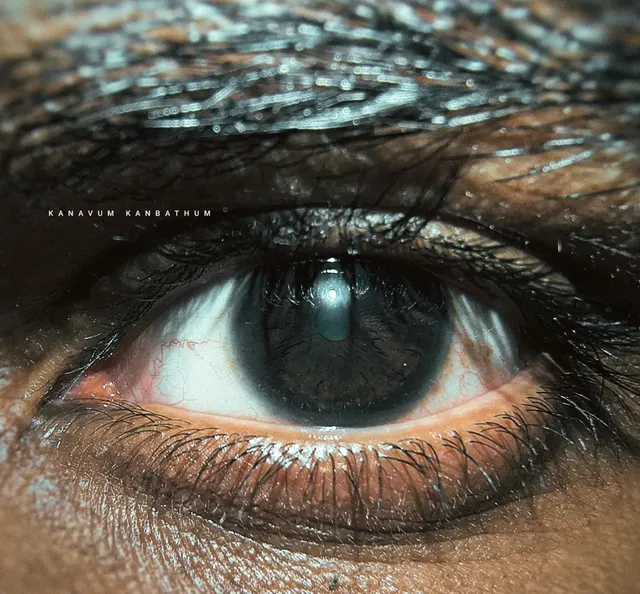
Judge a shape on a millimetre grid, never by eye. The iris is the ruler: it is close to 11.8 mm across in everyone, so it gives the scale of any photograph of an eye.
The problem
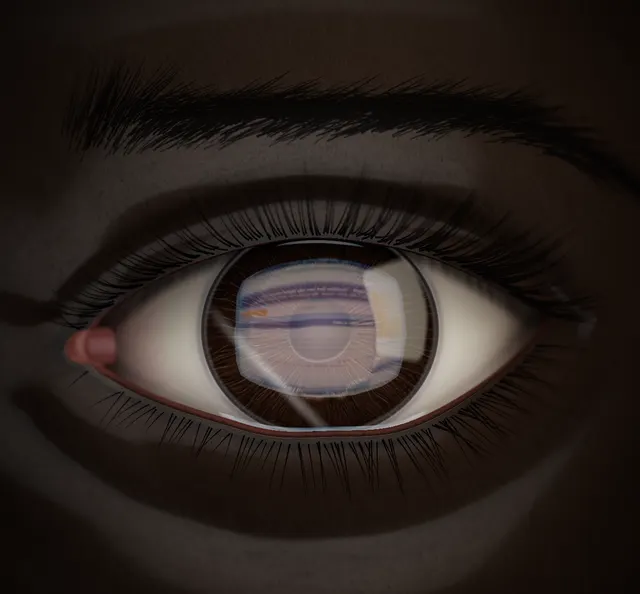
A render can be wrong in a way nobody can name. Reviews said "robotic" and "too perfect". Looking harder did not help, because the eye that judges a face is the same eye that is fooled by one.
The move
It is the grid method painters use to copy a portrait, with one change. The subject carries its own ruler.
Find the iris
In the photograph and in the render. Its width in pixels, divided by 11.8, is pixels per millimetre.
Lay the grid
Crop both to the same scale and lay a 1 mm grid over each, centred on the iris.
Read the numbers
How far each corner sits below the centre, and how tall the opening is at 1, 2, 4 and 6 mm from the corner.
Fit the twin
Fit the plain TypeScript copy of the lid curves to those numbers, and test it.
Change the shader
Only now.
What it found
Both corners of the photographed eye sit below the centre of the iris, the inner by about 3 mm and the outer by about 1.9. The render's inner corner was 0.9 mm low. Three millimetres against less than one: a difference too small to see as a number and large enough to feel as a stranger.
When not to use it
For light. A grid measures shape. Whether skin looks alive under a green tube is still a judgement, made by looking.