The shader eye
The second eye was a painting: one 850-line GLSL fragment shader that faked a whole eye in 2D on a full-screen quad. It found the idea of the page in the cornea, and then it hit its ceiling.
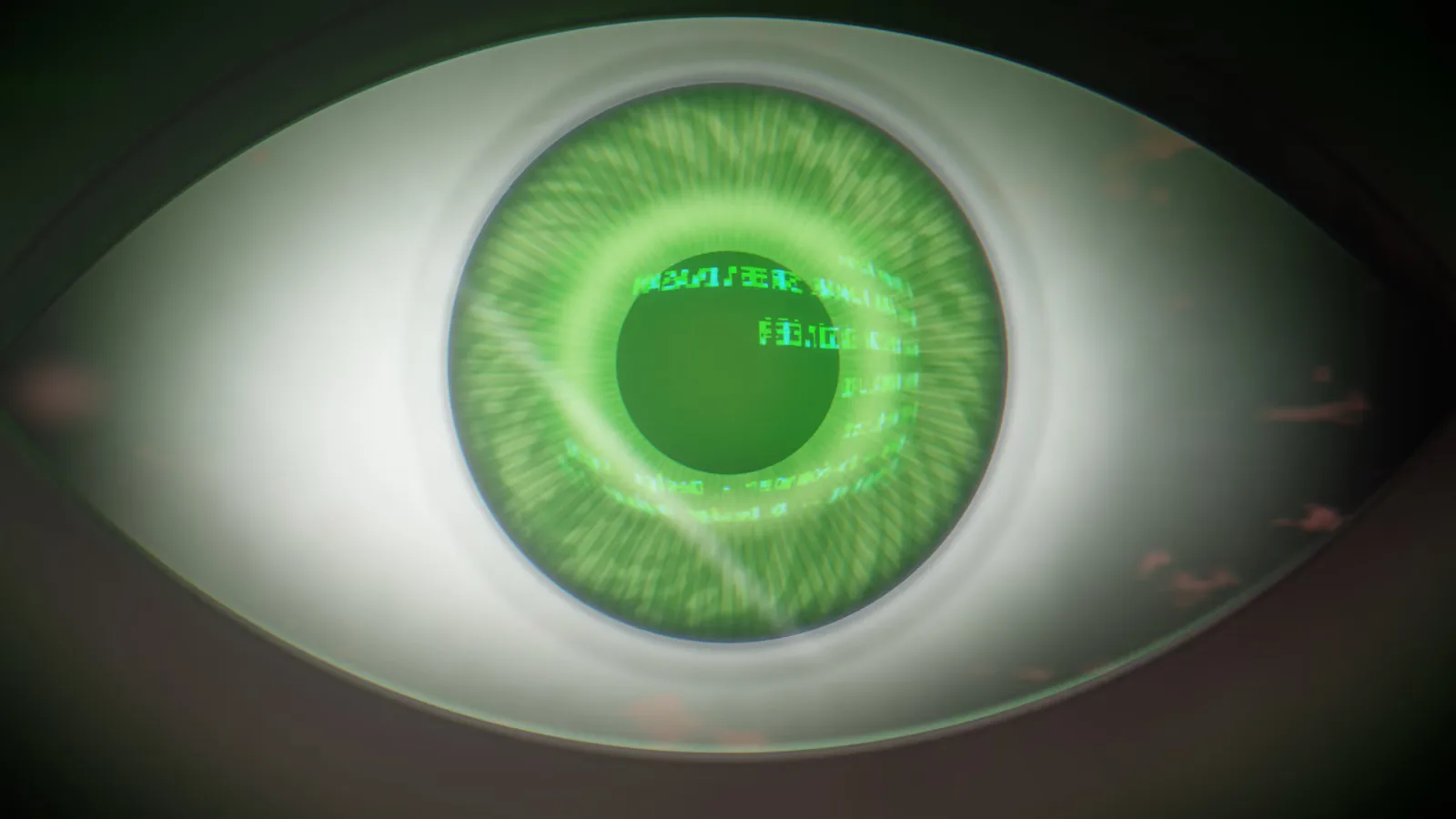
1970. The same formula as on the right, in a different light.
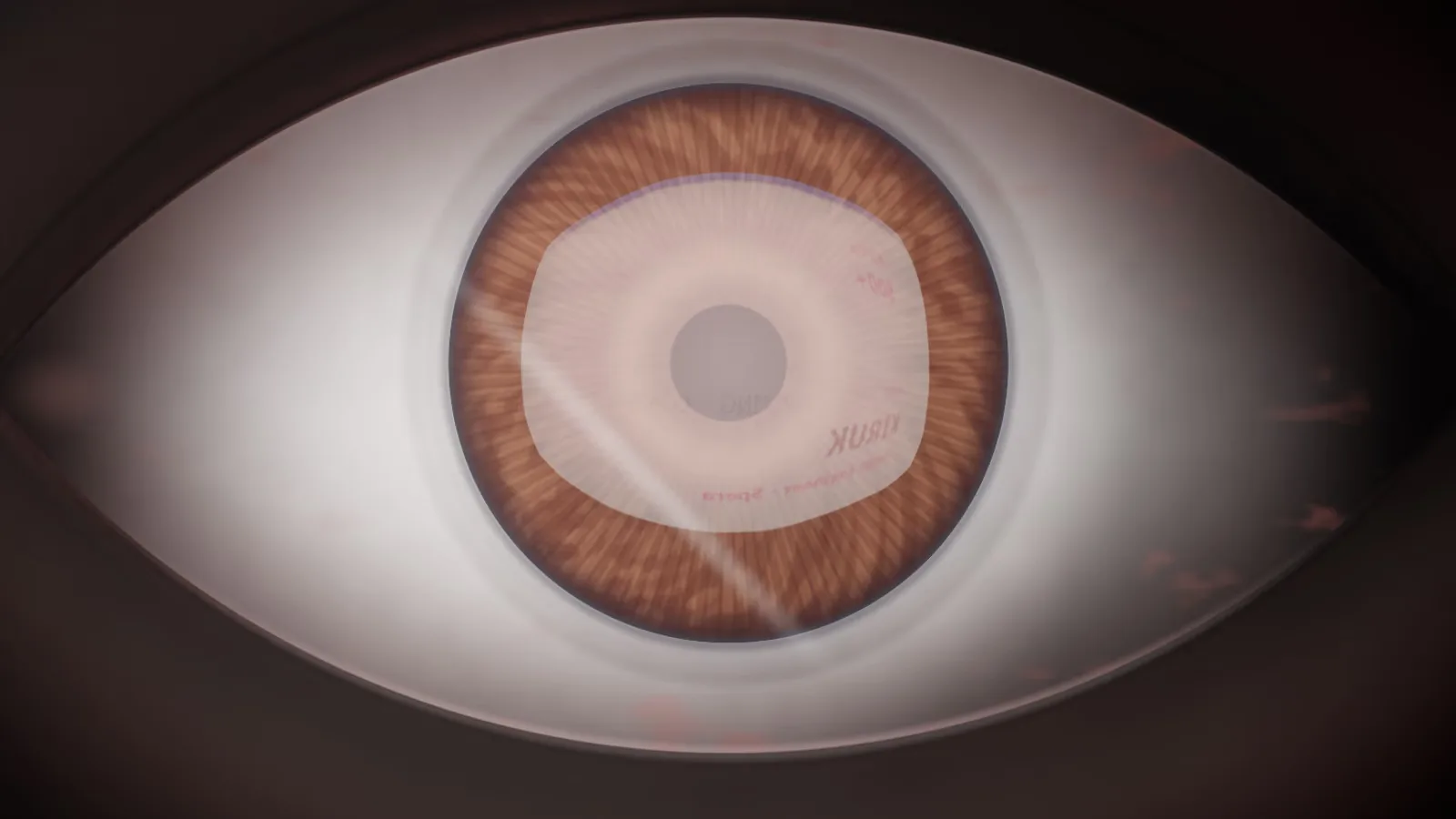
2003. The site's page, mirrored, sits in the cornea. That part was new.
What it was
A fragment shader runs once for every pixel and answers one question: what colour is this point? This one answered it for a whole eye. Inside an almond the pixel is white. Inside a circle it is iris, with noise for fibres. A dome formula bends a painted page across the middle to stand in for a reflection.
There was no geometry. The lids, the lashes and the room were all the same flat plane.
What it found
The era's screen lives in the cornea, and it is the only light. That sentence survived the rebuild unchanged, and became a pattern of its own.
Where it stopped
- Every new detail cost every pixel, because the noise ran over the full screen each frame.
- Lashes and lids had no depth, so they could not go out of focus or cast a shadow.
- The iris could not slide under the cornea when the eye turned.
It stays in the site as the last fallback. If the 3D eye cannot start, this one still can.